
Last updated November 23, 2026
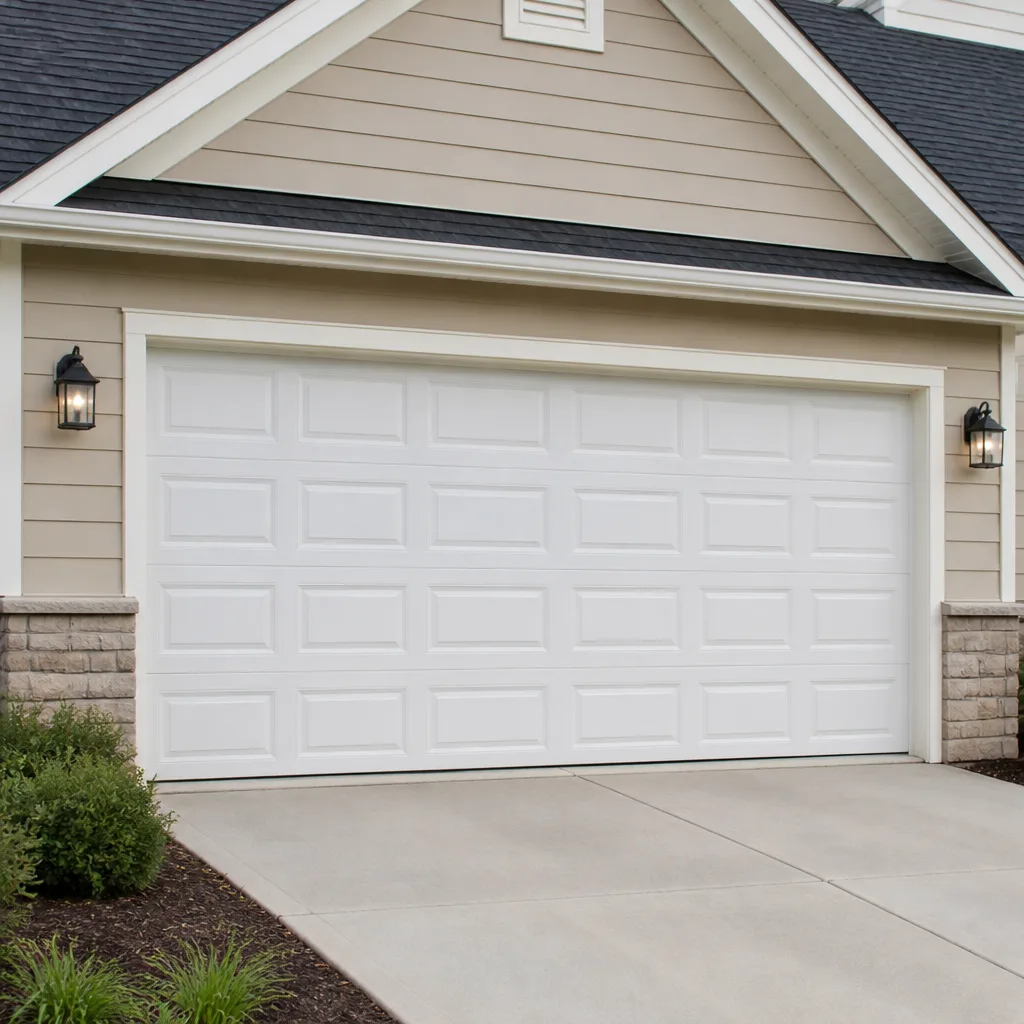 Raised-panel steel
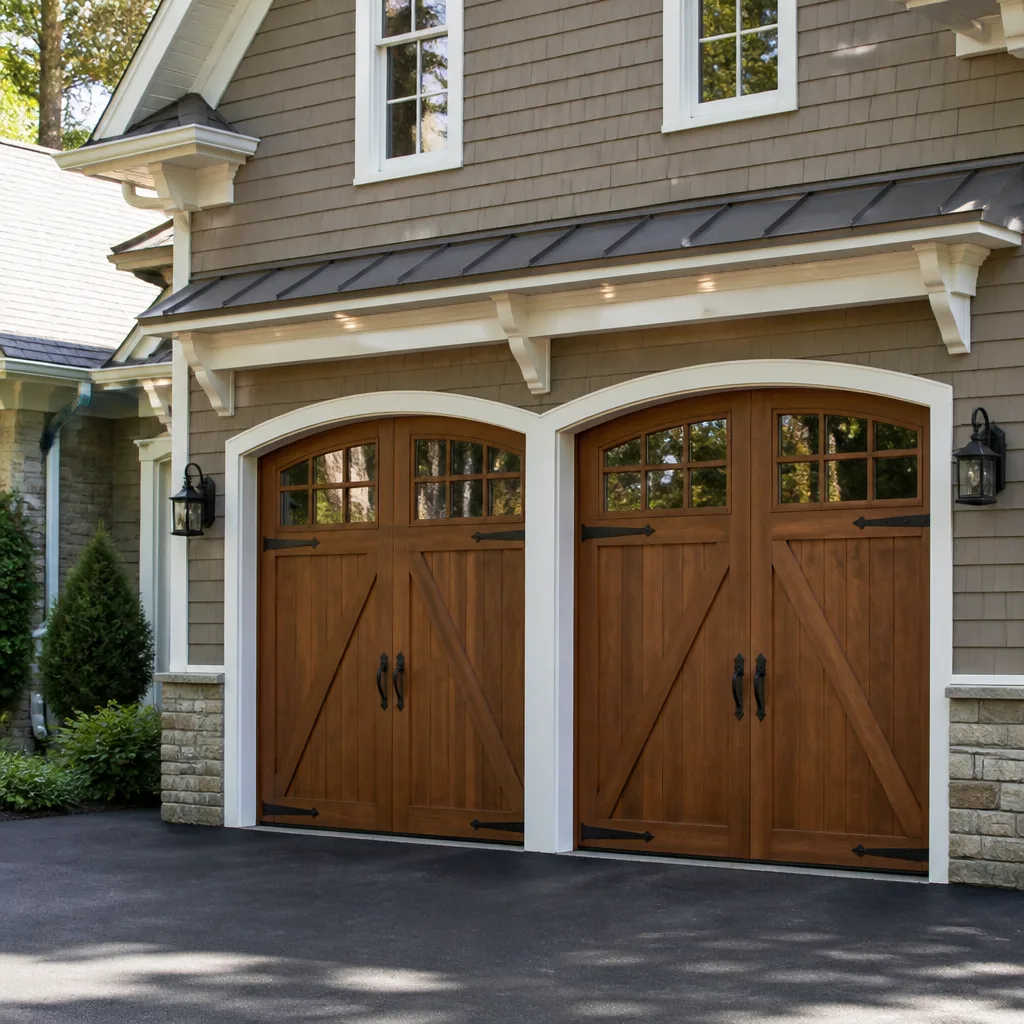 Carriage house
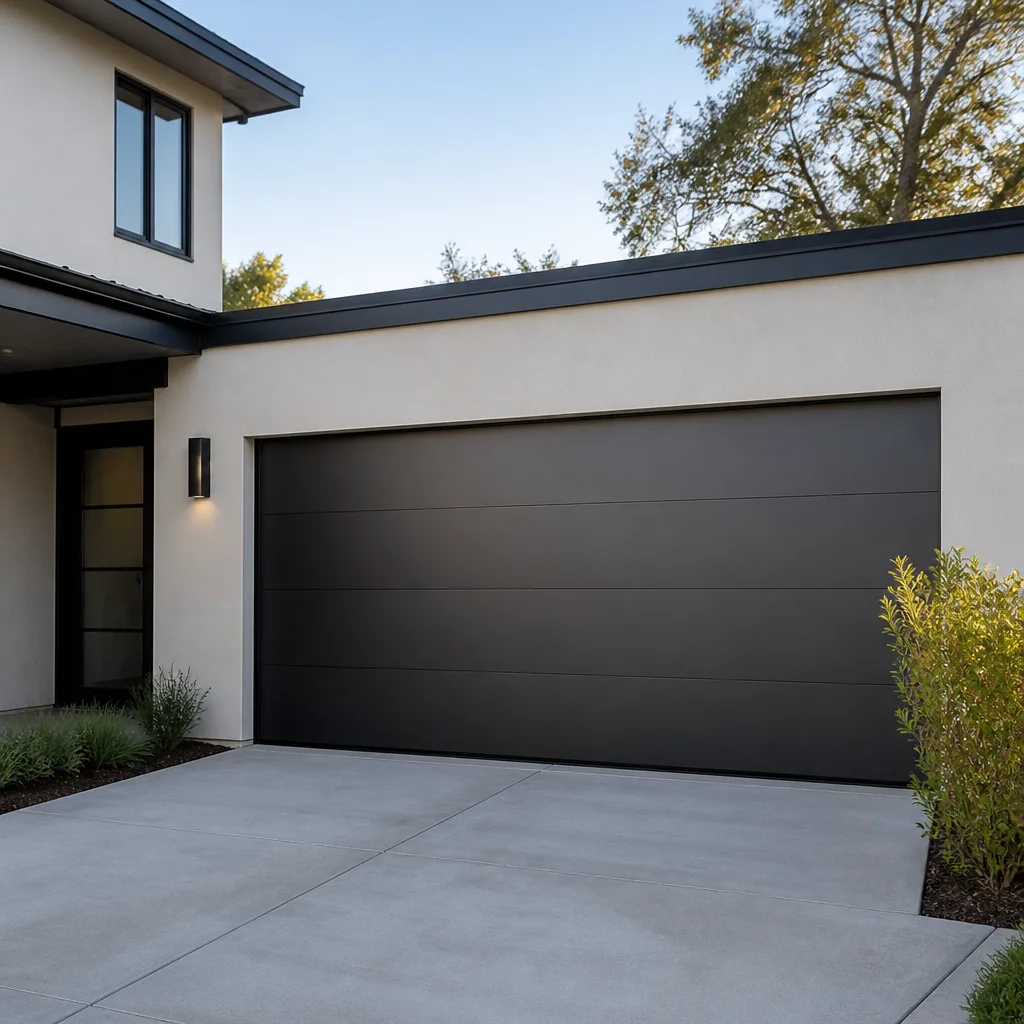 Modern flush
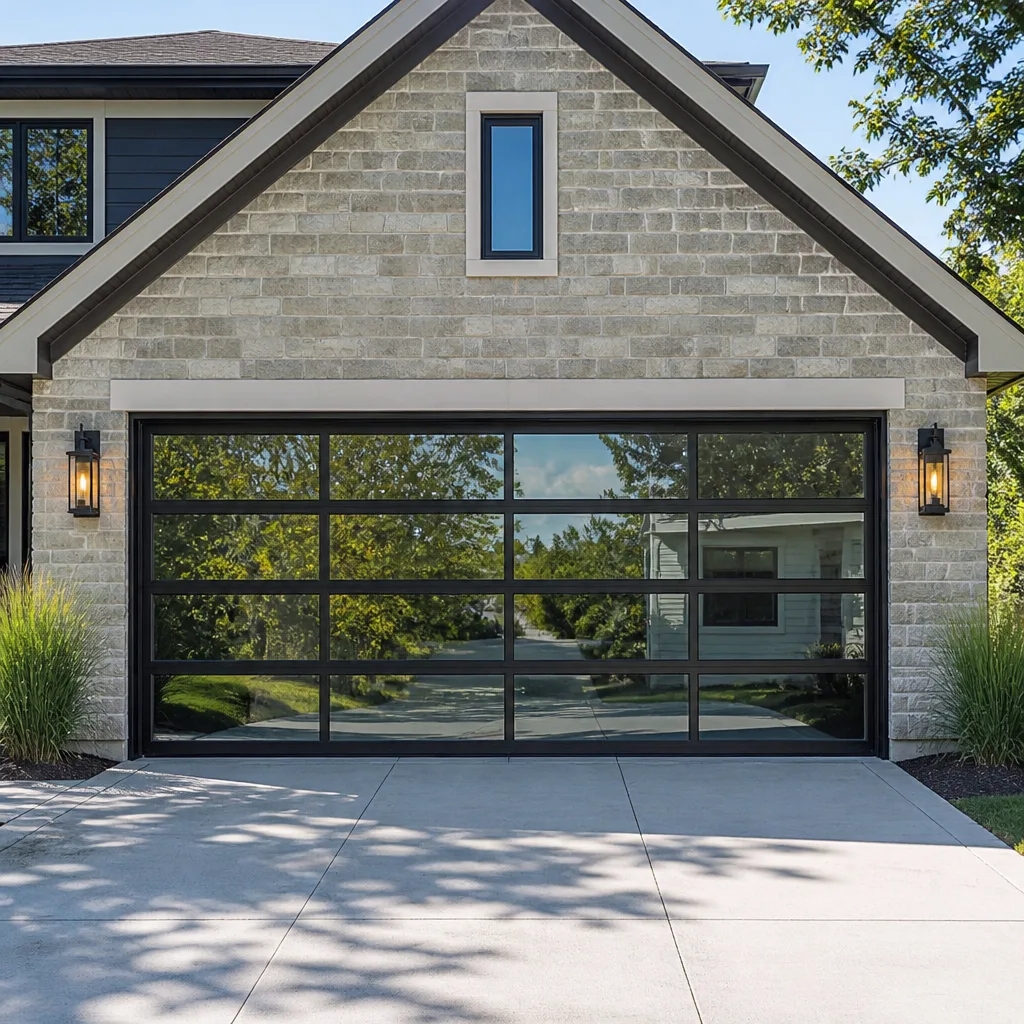 Full-view glass
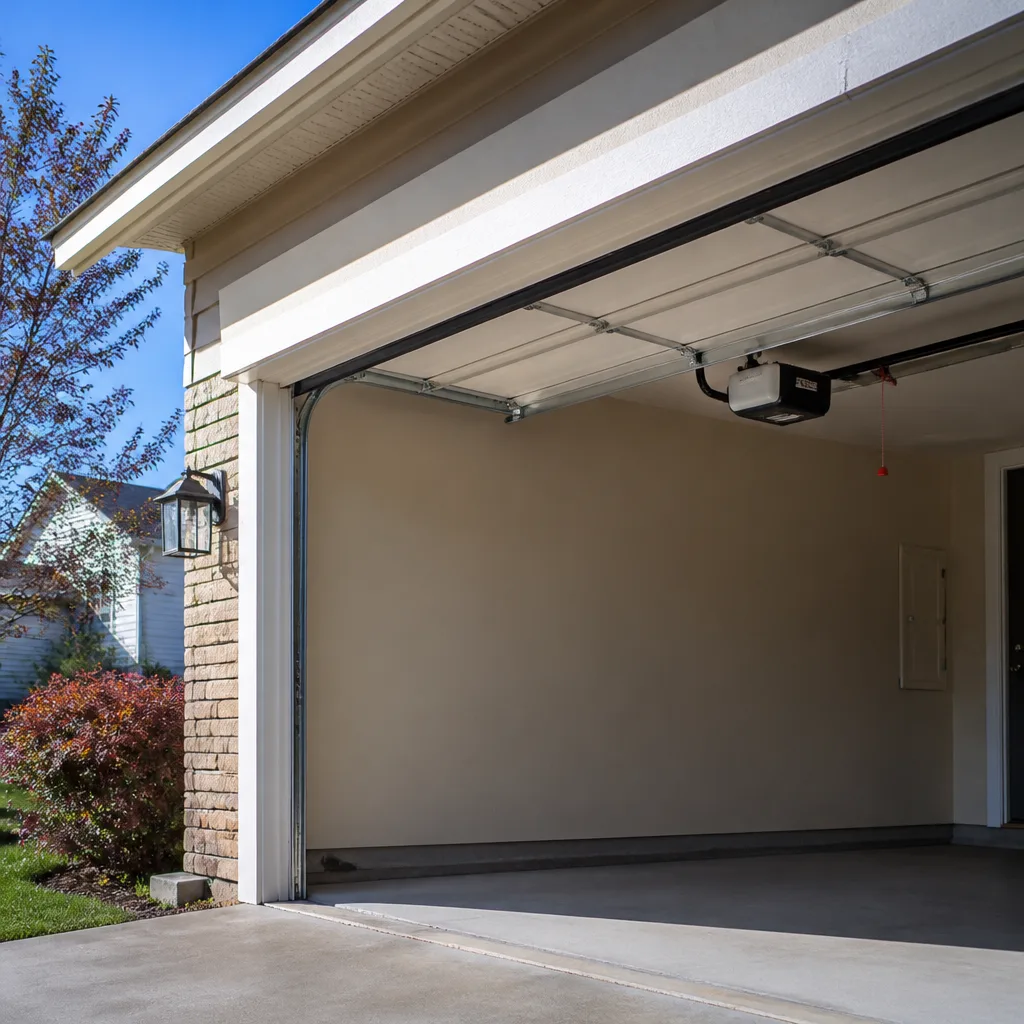 LiftMaster openers
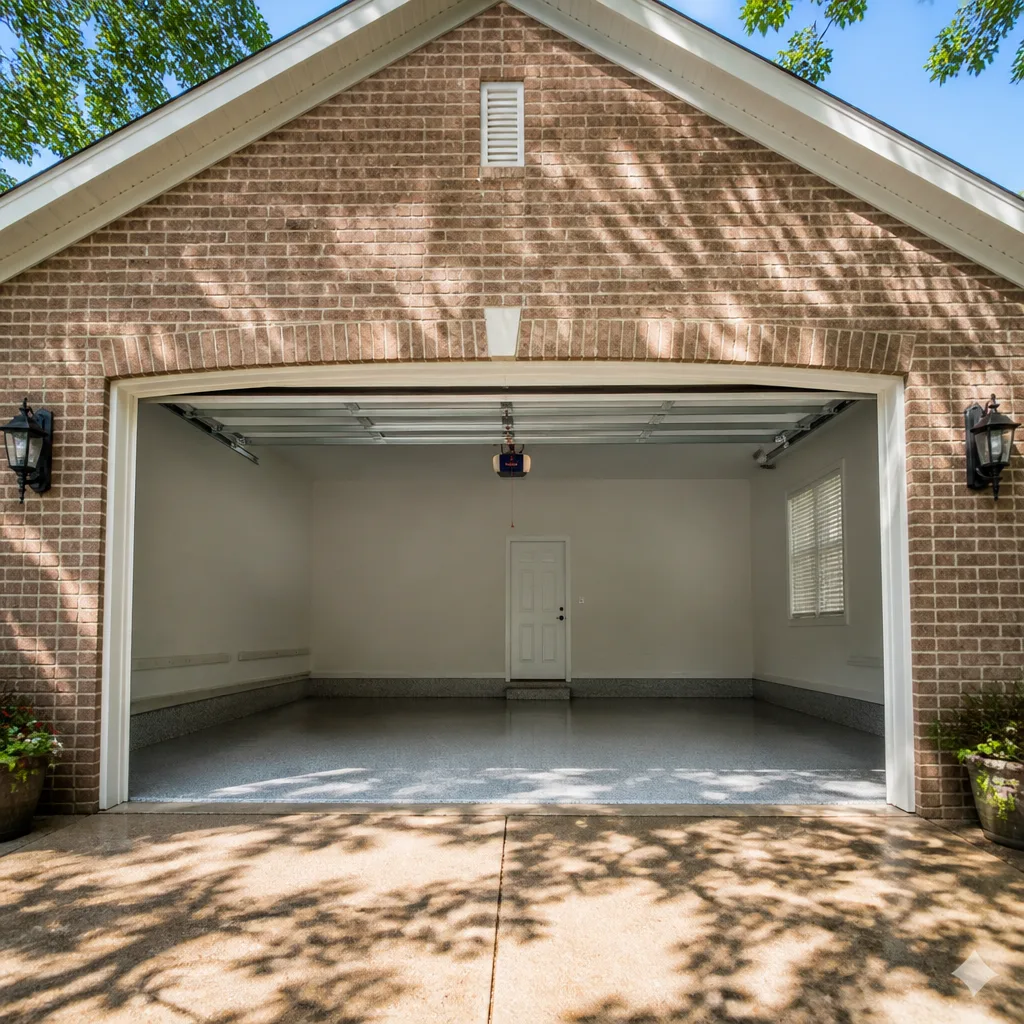 Chamberlain openers
Full 25-point door and opener safety check with every visit - springs, cables, rollers, tracks, and your LiftMaster or Chamberlain opener included
You get a price before we start. It does not change when the pro arrives.
Get your free estimateThe Complete Guide to Garage Doors in Vineland
Most garage door advice you’ll find online was written for a generic suburb somewhere in the middle of the country. It doesn’t account for the way a Vineland summer can push humidity past 80% for days, or how a hard Cumberland County freeze followed by a 50-degree thaw works on a steel door’s seams and weatherstripping. Vineland homes also sit inside USDA Hardiness Zone 7a, roughly 40 miles from the Atlantic, so the air here carries moisture and salt that a door has to live with year after year. Get the material, insulation and opener choice right and a door lasts. Get them wrong and you’re back to replacing panels in a few years. This guide walks through the decisions that actually matter for a Vineland garage door, from sizing and code to springs, openers and the repair-versus-replace call.
Quick Answer
The right garage door for a Vineland home is usually a steel door with a polyurethane foam core, sized to the actual rough opening, paired with a battery-backup opener. Polyurethane holds its insulating value through the region’s humidity and freeze-thaw swings far better than the polystyrene found in many builder-grade doors. For a garage attached to living space, correct installation and insulation matter more than the R-value on the marketing sticker. And in a region that takes nor’easters, a battery-backup opener is a practical necessity, not an upgrade.
Styles & brands we work with
- Raised-panel steel
- Carriage house
- Modern flush
- Full-view glass
- LiftMaster openers
- Chamberlain openers
Table of Contents
- Why Vineland Garage Doors Face a Different Test
- Choosing a Door Material for Vineland’s Climate
- Insulation: Real Thermal Performance vs. R-Value Marketing
- Older Vineland Homes and Rough-Opening Constraints
- Choosing an Opener for South Jersey Power Outages
- Repair, Panel Swap or Full Replacement: A Decision Tree
- Springs, Tracks and the Parts That Fail First
- Brand Fluency and Why It Speeds Up a Repair
Why Vineland Garage Doors Face a Different Test
Vineland is an inland South Jersey city, not a beach town, but its weather is still driven by coastal systems. In summer, humid air moves inland and settles, pushing relative humidity above 80% on plenty of days. In winter, cold snaps drop well below freezing and then let go, so a door cycles through expansion and contraction dozens of times a season. That freeze-thaw rhythm works on weatherstripping, hinges, roller bearings and the bottom seal. It also finds any weak spot in a door’s finish and gets under it.
A carport or unheated garage doesn’t feel this much. An attached garage does. When the garage shares a wall with living space, every bit of moisture, cold and heat that passes through the door affects the house. That’s why the insulation and the installation job matter so much here, and why a cheap builder door often underperforms in a Vineland home that’s lived in year-round.
The practical takeaway: pick components for the conditions, not just the price tag. A door built for a dry climate can look fine on day one and start showing seam rust, sagging panels or a failing seal within a few humid summers. We work on garage doors across Vineland and see the same failure patterns repeat because the wrong door or the wrong install was chosen at the start. The guide below is organized around getting those initial choices right.
Choosing a Door Material for Vineland’s Climate
Steel dominates the residential market for good reason: it’s strong, it holds a finish, it’s available in the widths older homes need, and it’s easy to service. For Vineland, a steel door with a bonded foam core is the usual best fit. The door needs to resist moisture on the inside face and hold its shape through temperature swings. Steel does both when it’s properly coated and installed with the right weatherstripping.
Here’s how the main materials stack up for the local climate:
- Steel with a foam core: The strongest all-around choice. Copes well with humidity and freeze-thaw, resists impact, and keeps a serviceable finish for years. Clopay and Amarr both make lines in this category.
- Steel with a polystyrene core: Common in builder-grade doors. Lighter insulation value, and the panel can be more prone to denting and internal condensation if the seal fails. Workable, but a step down for an attached garage.
- Aluminum: Light and rust-resistant, often used in full-view glass doors. A good match for a modern frontage but less insulating, so it’s a poor fit over an attached, heated garage in a cold snap.
- Wood: Beautiful and repairable but needs consistent sealing. Vineland’s humidity swings mean a wood door needs attention on a schedule, not once.
- Composite/faux wood: Looks like wood, tolerates moisture better, and holds up under South Jersey weather better than natural wood if you want that look without the upkeep.
Fiberglass and vinyl options exist for specialty looks, but they’re rarely the best thermal or durability pick for a working attached garage here. If you’re unsure which material suits your home, our Garage Door Repair Vineland team walks through the options by opening size and insulation needs before anything is ordered.
Insulation: Real Thermal Performance vs. R-Value Marketing
An R-value on a brochure is measured under lab conditions. Your garage sees real conditions: gaps around the perimeter, a bottom seal that takes wear, and a wall shared with a heated room. Those details decide more of the actual performance than the sticker number. A door rated highly but installed with a poor perimeter seal will still leak cold air in January and let humidity creep in all summer.
For a garage attached to living space, focus on these in this order:
- Seal the perimeter. Weatherstripping and a bottom threshold that actually contact the door stop air and moisture movement. This is the first place to check when a garage feels cold or damp.
- Choose a bonded foam core. Polyurethane foam bonded to the steel skin insulates better and holds its shape through humidity swings than loose polystyrene panels.
- Mind the door and opener interface. A heavier, well-insulated door needs an opener rated for the load. Mismatched equipment wears out faster.
- Check the seal between the door and the floor. A worn bottom seal is cheap to replace and worth a lot in comfort.
We’ve found that homeowners often over-index on the R-value label and under-index on the install. The best-insulated door in the catalog still underperforms if the tracks aren’t plumb or the seal doesn’t seat. When you’re comparing Clopay or Amarr lines, ask what the actual panel construction is and how it will be sealed, not just the headline number. That answer is what keeps a Vineland garage comfortable through both summer humidity and the winter freeze.
Older Vineland Homes and Rough-Opening Constraints
A lot of Vineland’s housing stock was built before 1990, and those garages come with quirks. Original openings were often framed to a standard size that doesn’t quite match today’s catalog widths, and header heights vary from house to house. This is where a lot of replacement jobs go sideways if nobody measures first. A brand that fits one home’s opening may not offer the exact size another one needs without a custom order.
What usually needs checking before a replacement is ordered:
- Rough opening width and height. Measure the framed opening, not the old door. The difference matters when the door needs to clear the opening cleanly.
- Header height and clearance. Low headers limit how the door travels up and how much space an opener has to work in.
- Side clearance and jamb condition. Older jambs may be out of plumb or rotted at the base, which affects track mounting.
- Ceiling height and opener clearance. A low ceiling may call for a low-clearance track setup or a jackshaft opener instead of a standard one.
Newer Vineland construction usually follows more predictable dimensions and offers more brand flexibility. Older homes often dictate the brand, because only certain lines come in the width you have. Measuring before ordering is the single biggest thing that prevents a delayed install or a door that doesn’t fit. If you’re planning a replacement, our guide to garage door repair covers the assessment that should come first.
Choosing an Opener for South Jersey Power Outages
Nor’easters and summer storms knock the power out often enough in this part of South Jersey that a battery-backup opener isn’t a luxury. It’s part of a sensible setup. A power outage with a car inside and a door that won’t lift is frustrating, and it’s the exact scenario a battery-backup model is built for. LiftMaster has made battery backup a standard feature on its main residential line, which is why so many Vineland and South Jersey homes run one.
When picking an opener, weigh these against your door and home:
- Battery backup: The key feature for storm season. It keeps the opener running through an outage.
- Lift rating: Match the opener to the weight of an insulated door. A too-small opener wears out quickly.
- Belt vs. chain drive: Belt drives run quieter, which matters if a bedroom sits over the garage. Chain drives are robust and simpler.
- Smart connectivity: LiftMaster and Chamberlain both offer app-connected models. Useful if you want alerts or remote control.
- Screw or jackshaft drive: Consider these for low-clearance or high-use commercial setups.
The brand matters less than getting the right type and load rating. We service LiftMaster, Chamberlain, Genie, Craftsman and Raynor openers, so whichever you have, we can diagnose it. Our techs handle garage door opener repair for everything from a dead logic board to a stripped gear. A frequent complaint is a hum with no movement, which is usually a capacitor or gear issue, not a reason to replace the whole unit.
Repair, Panel Swap or Full Replacement: A Decision Tree
Not every problem means a new door. The decisions below are how we think about a job, and they usually point to a clear next step. Work through them in order.
- Is the door mechanically sound but cosmetically worn? A panel swap or fresh paint handles dents, faded finishes and single-panel damage. It’s the cheapest path when the tracks, springs and opener are healthy.
- Is the door old (roughly 15-plus years in service) and failing in multiple spots? Repeated panel dents, a sagging structure and worn springs together usually point to replacement.
- Are the springs or opener failing but the door itself solid? Repair the failing part. A well-built door can outlast several springs and a couple of openers.
- Does the door sit out of code for the home’s use? Safety features, attachment points and load rating should be checked. Most cities require a permit for a full door replacement, so ask Vineland’s building department before work starts.
- Are you changing the door’s material or size? That’s a full replacement with a new track and opener load check.
- Is the damage impact damage? A single dented panel can often be swapped. Panel damage across multiple sections usually means replacement.
Hail is uncommon here, so the impact damage we see is more often a bumper, a ladder or a gate swinging into the panel. The decision tree above keeps you from paying for a new door when a panel swap would do, or from keeping a door alive that’s quietly causing your opener to work too hard. Our team gives a free estimate so the choice is made with real numbers, not guesses.
Springs, Tracks and the Parts That Fail First
Springs carry the full weight of the door and take the most punishment. In a freeze-thaw climate, they cycle constantly, and they can fail without warning. This is also the most dangerous part of the system. If you see a gap in a torsion spring or the door won’t stay up at mid-height, stop and call. We don’t recommend trying to inspect or replace springs yourself. The internal tension is enough to cause serious injury, and the wind-up tools are not household equipment. Our specialists handle garage door spring repair with the tools and training the job demands.
Common spring pricing, as typical estimates:
| Service | Typical estimate |
|---|---|
| Torsion spring replacement (one spring) | About $180 to $340 |
| Matched pair (usually replaced together) | About double the single |
| Extension spring replacement (one) | Lower end of the range |
| Track realignment, rollers or hinges | Set per job by written estimate |
A pair is usually replaced together because the second spring has taken the same cycles as the first. That means a pair costs about twice the single-spring estimate above. The written estimate sets the final price, and we agree it with you before any work starts. Beyond springs, tracks can be knocked out of alignment by a bumper or a bend, rollers wear flat spots, and hinges loosen with age. These are affordable fixes if caught early, which is why hearing the door out mid-cycle is worth attention.
Brand Fluency and Why It Speeds Up a Repair
A garage door specialist who knows the brand saves time on both diagnosis and parts. The opener that hums without moving, the door that reverses halfway up, the spring that lasted decades – all of these behave differently across makes. When we arrive and know we’re dealing with a Chamberlain opener or a Clopay door, we start with the likely cause instead of guessing. That’s what a single-trade focus delivers: every technician and tool is specific to garage doors, so a repair gets done right the first time.
We work on equipment from the brands you’re most likely to own: LiftMaster, Chamberlain, Genie, Clopay, Amarr, Wayne Dalton, Craftsman and Raynor. That’s a range that covers virtually every residential and commercial door in Vineland. Our technicians have up to 11 years of experience, and each of them diagnoses the same failures day in and day out. When a repair reveals a door that’s genuinely past saving, we handle the new install too, without sending you to a second company. And when a door is down and a car is trapped or a business can’t open, emergency garage door service is a core part of what we do, not an add-on.
Common Mistakes to Avoid
- Buying on the R-value alone. A high sticker number means little if the perimeter seal doesn’t seat and the tracks aren’t plumb. Ask about panel construction and installation quality instead.
- Ordering a door before measuring the rough opening. Older Vineland homes rarely match catalog dimensions exactly. Measure the framed opening, not the old door, before ordering.
- Skipping battery backup in storm country. A nor’easter with a car inside and no power makes the point. Choose a battery-backup opener for a home that regularly loses power.
- Replacing a matched spring pair one at a time. The second spring has the same wear on it. Replace the pair together so the door stays balanced.
- Replacing an opener when a smaller part failed. A hum-with-no-movement is often a capacitor or gear. Diagnose before replacing the whole unit.
- Ignoring a slow-feeling door. A door that drags or reverses is warning you the springs or opener are struggling. Address it before it fails at the worst time.
- Assuming a panel swap is always enough. A single dent is fine to swap; widespread damage or a sagging structure usually means replacement.
See the difference
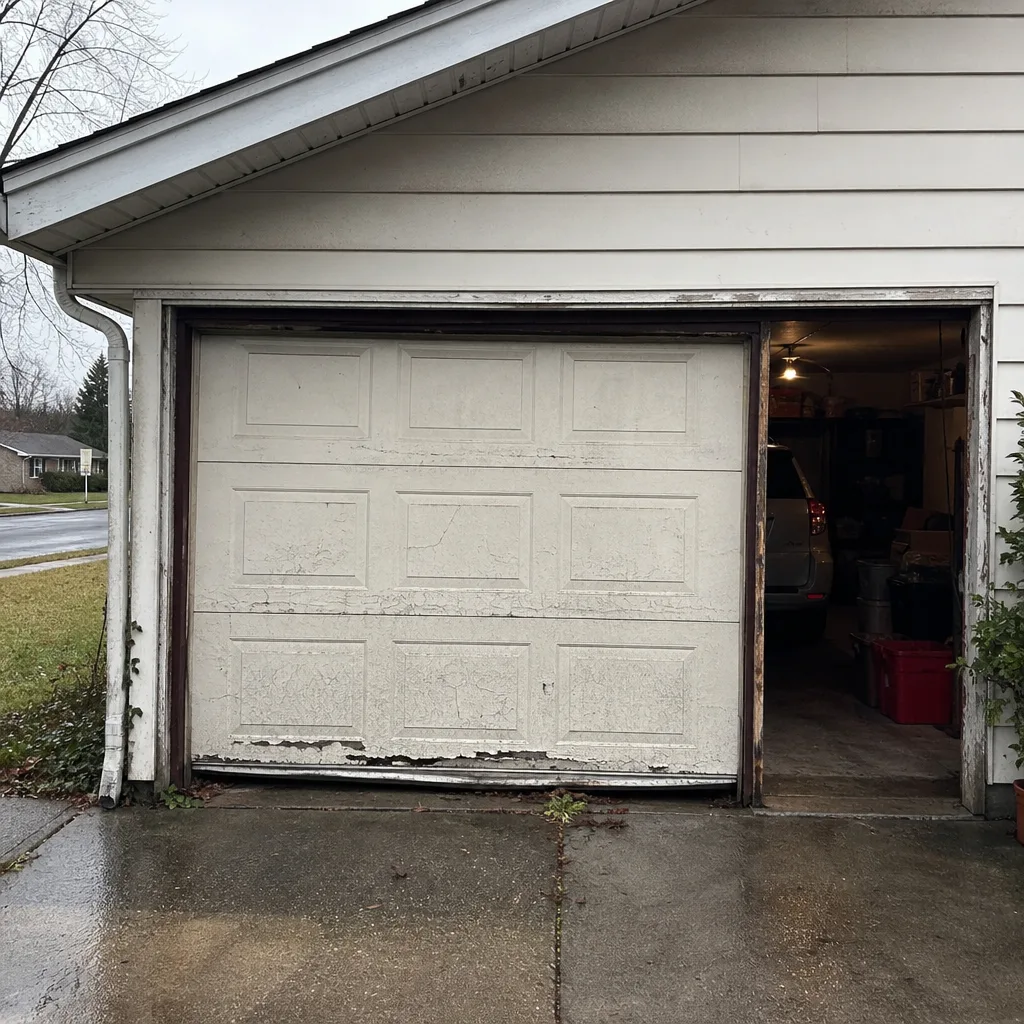 Before
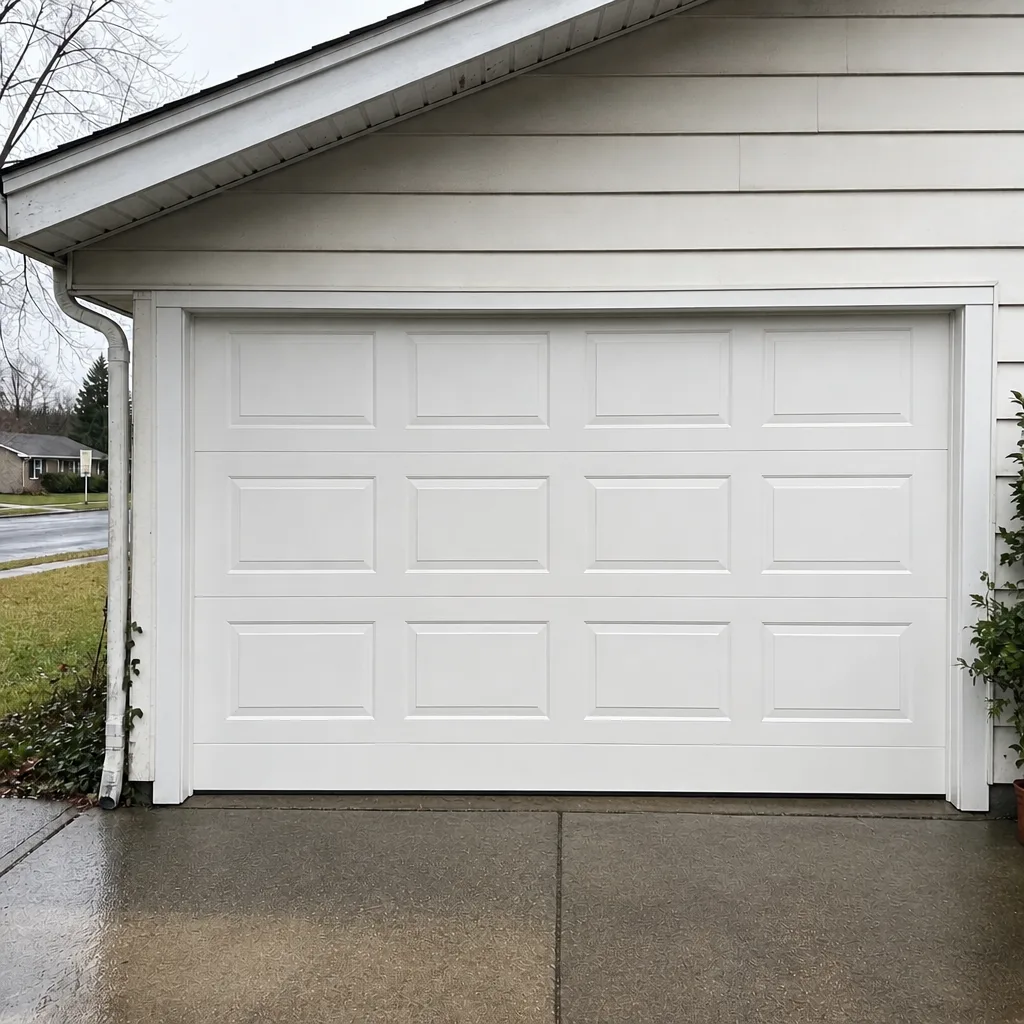 After
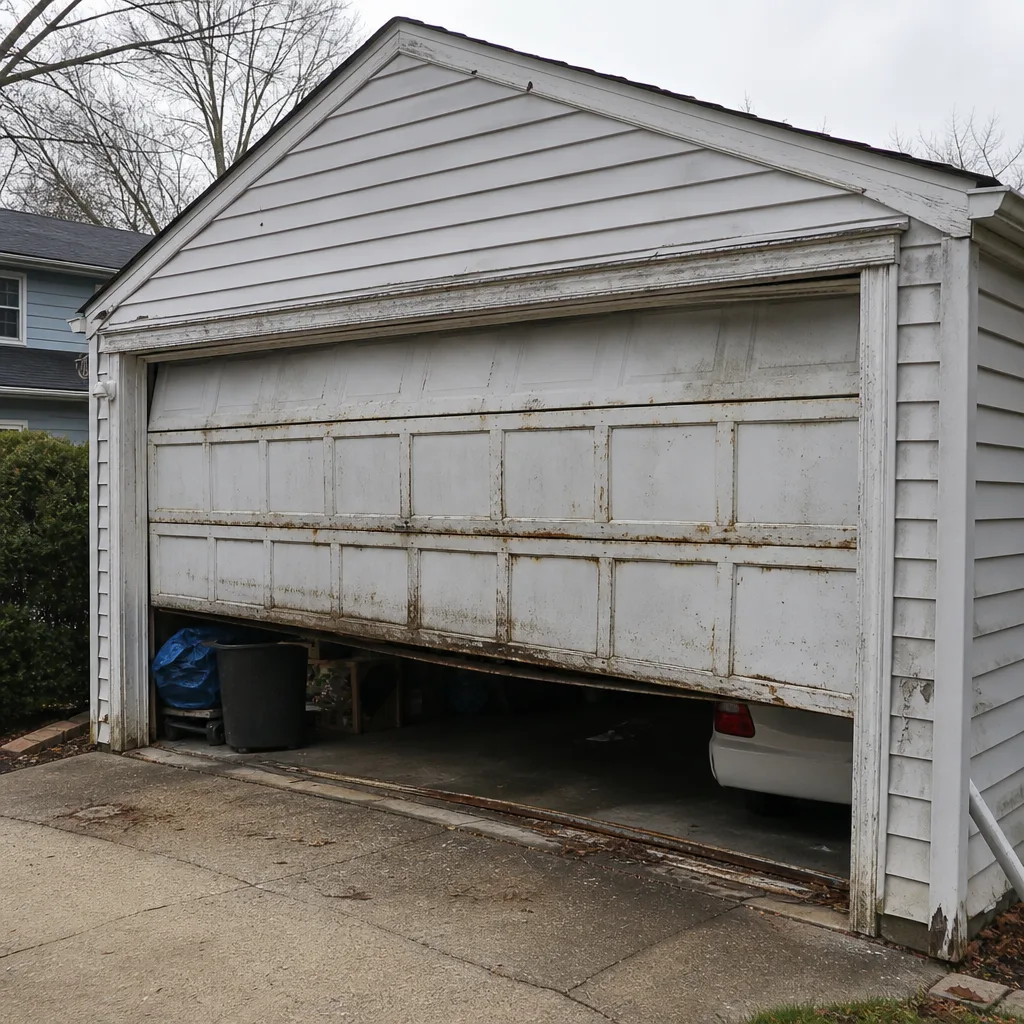 Before
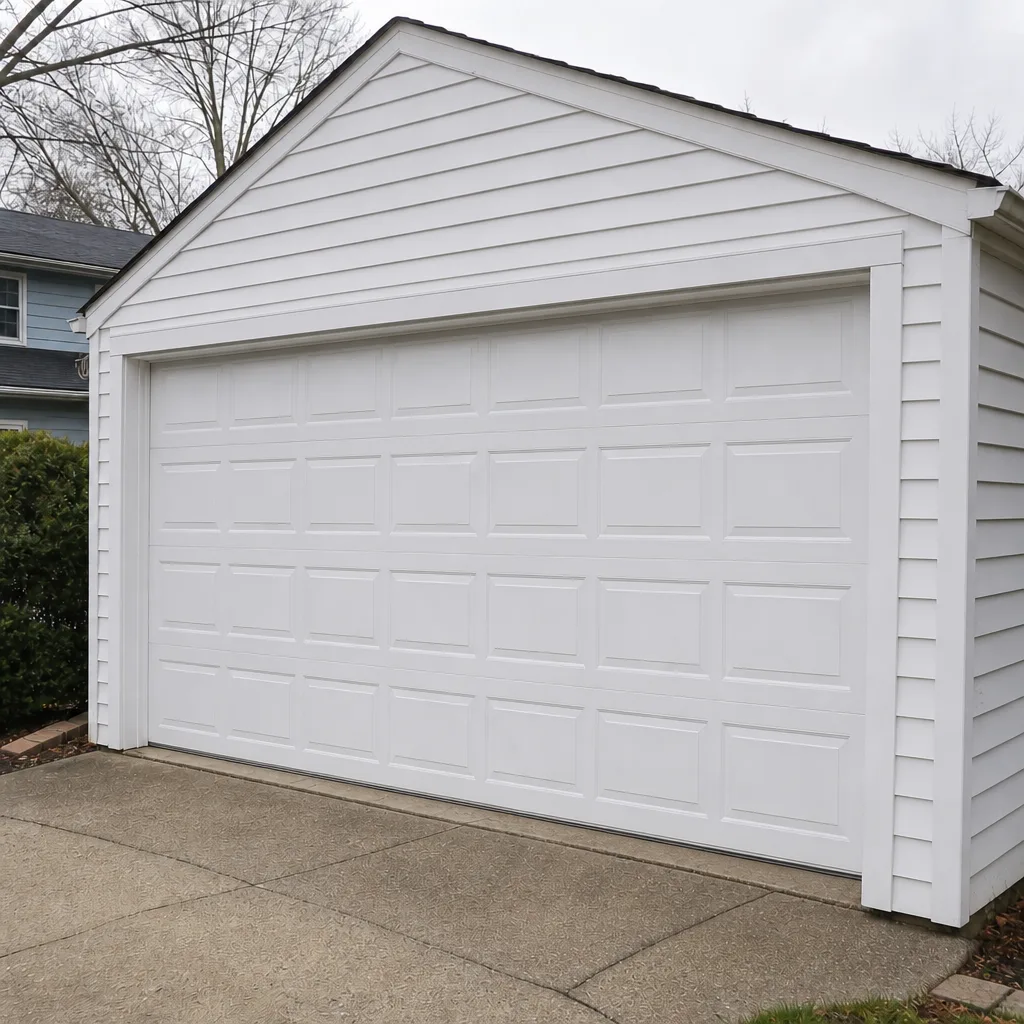 After
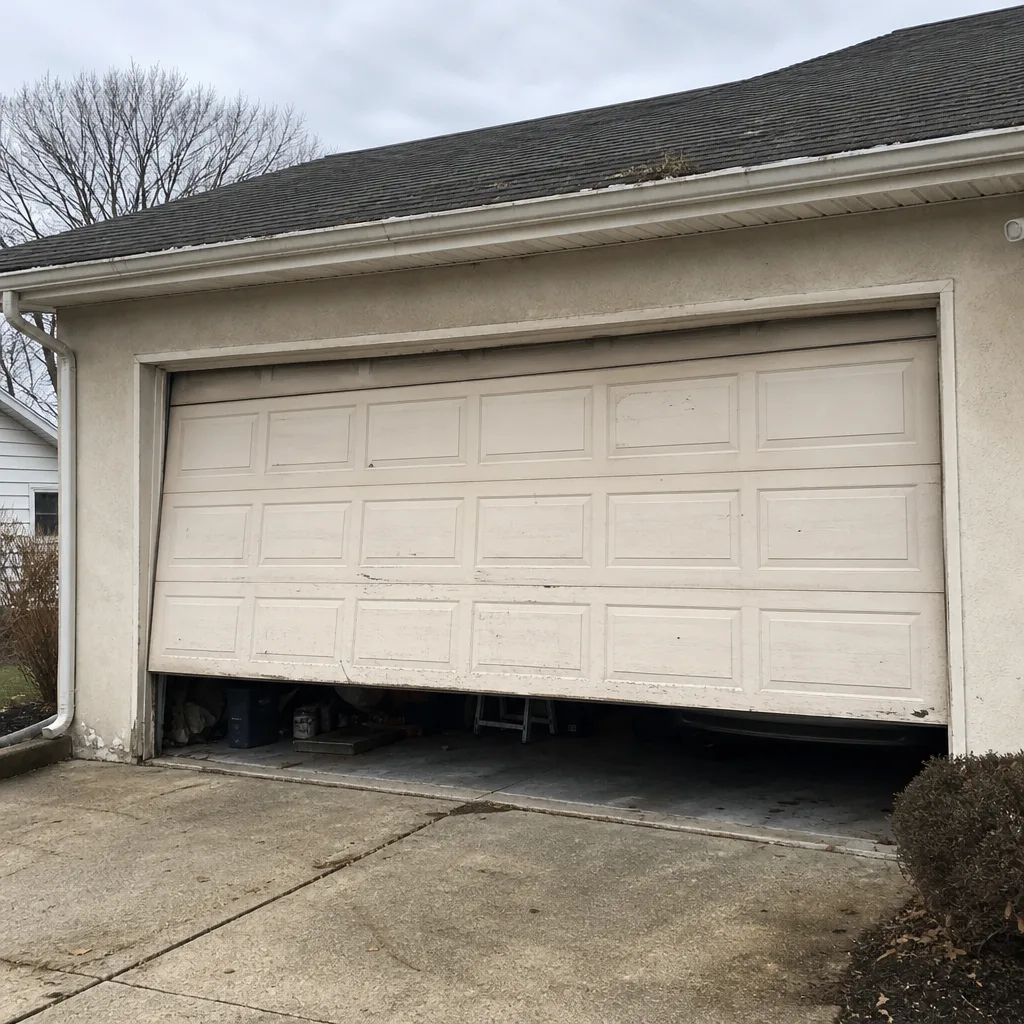 Before
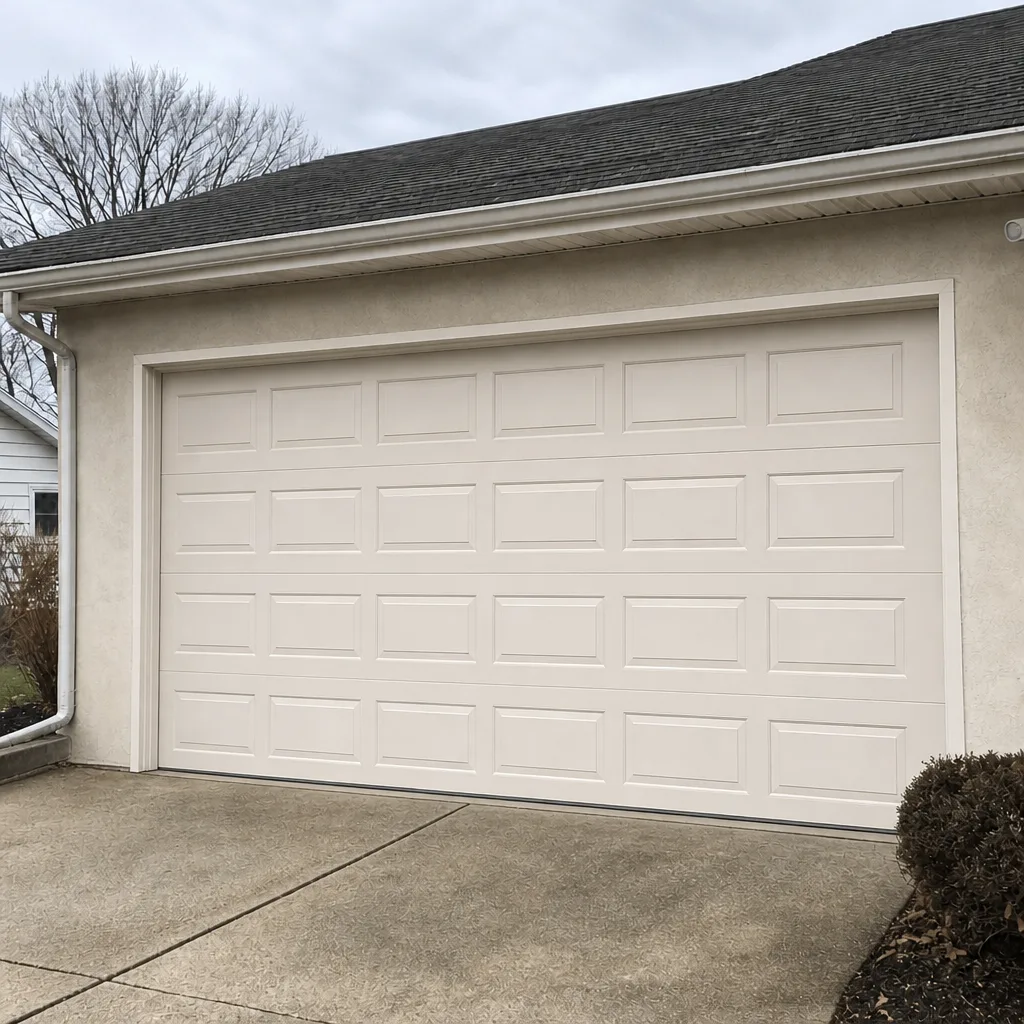 After
When to Call a Professional
Some garage door jobs are fine to watch and wait on. Others need a specialist now. Call us when a spring is broken or the door won’t hold at mid-height, because that’s a safety issue and not a job to poke at. Call when the door is off its tracks, hanging crooked or stuck partway. Call when the opener reverses, hums without moving, or won’t respond. Call when a car is trapped inside or your business is locked shut behind a dead door. For cosmetic wear, a single dent or a noisy roller, a scheduled appointment works fine. Garage Door Repair Vineland offers free estimates in Vineland. Call (844) 443-4769. We answer 24/7. Fast dispatch from 7am to 7pm, Sunday through Friday.
Frequently Asked Questions
A single torsion spring replacement typically runs about $180 to $340, and since matched pairs are usually replaced together, a pair costs roughly twice that. The written estimate sets the exact price before any work begins. Call (844) 443-4769 for an exact quote. Estimates are free.
Yes, a battery-backup opener is worth it for most Vineland homes because nor’easters and summer storms knock out power often enough that a dead door with a car inside is a real possibility. LiftMaster makes battery backup standard on its main residential line, so it’s easy to find. A simpler path is to install one at the same time as a new door.
Repair if the door is mechanically sound and the problem is one failing part like a spring or opener. Replace if the door is 15-plus years in service and failing in multiple places, sagging, or needs a different size or material. Cosmetic single-panel damage usually calls for a panel swap. Our free estimate gives you the clear call.
In most cases, yes. Same-day service is available for urgent repairs, and emergency service is a core part of what we do. We answer 24/7, and fast dispatch runs 7am to 7pm, Sunday through Friday. A call outside dispatch hours books into the next opening.
No. The written estimate is the price, and we agree it with you before any work starts. That’s how a garage door job should work. Call (844) 443-4769 for an exact quote. Estimates are free.
We service LiftMaster, Chamberlain, Genie, Clopay, Amarr, Wayne Dalton, Craftsman and Raynor, covering virtually every residential and commercial door in Vineland. You don’t have to hunt down a brand-specific specialist. We know the equipment and can diagnose it on arrival.
The Bottom Line
Getting the garage door right in Vineland comes down to a few choices. Choose a steel door with a bonded foam core and make sure it’s installed with a solid perimeter seal. Measure the rough opening before ordering, especially in an older home. Pair an insulated door with an opener rated for its weight, and put a battery-backup unit on it for storm season. Fix springs as a pair, replace a failing part before it takes the opener with it, and use the repair-or-replace decision tree instead of guessing. Do those things and your door holds up through humid summers and hard freezes. When you’d rather have a specialist handle it, that’s what we do. Call (844) 443-4769 for a free estimate. We answer 24/7. Fast dispatch from 7am to 7pm, Sunday through Friday.
Written by the team at Garage Door Repair Vineland.